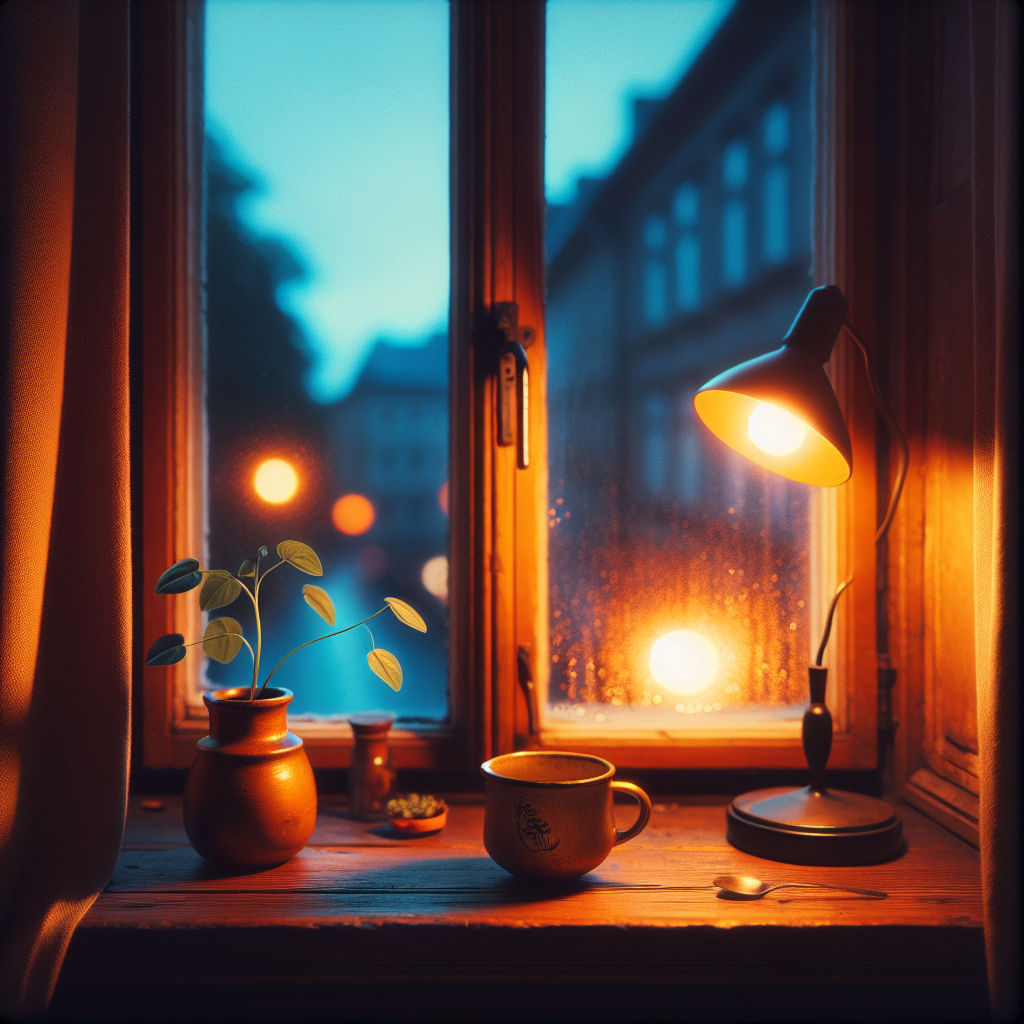
Windowlight Diaries: Small Stories in Soft, Mixed Light
 Maya Calder
·
Maya Calder
·
Why windows are everyday magic
Windows are quiet studios that come pre-installed in most homes, cafés, and trains. They offer a range of qualities — a broad, soft sky light, narrow shafts at golden hour, or the cool, directional light of an overcast afternoon. Mix that with interior lamps, neon signs, or a TV glow and you’ve got layered color and contrast without hauling extra gear. The trick is seeing what’s already there and nudging it into a story.
Finding a scene worth photographing
Start small. A cracked mug on a sill, a plant leaning into the light, a pair of shoes left by the window, or a person lost in thought. Look for three simple ingredients:
- Light quality — soft, hard, warm, cool, directional.
- Subject — something that suggests a story or mood.
- Foreground or frame — something to add depth: glass, curtain edge, or window trim.
When those three align, the image stops being just an object and becomes a moment.
Composition — small gestures that matter
Windows give you natural frames. Use them.
- Frame with the sill or curtain: place your subject off-center and let the window edge act like an implied border.
- Layer: include something in the foreground (blurred glass, a curtain fringe) to create depth.
- Negative space: allow empty shadow to breathe — it gives the eye a place to rest and highlights the lit subject.
Think of composition as choreography: the light is the dancer, your camera is the stage manager.
Practical camera tips
You don’t need fancy gear. A phone, a small mirrorless, or an old DSLR will do. What matters are a few settings.
- Shutter speed: keep it fast enough to avoid blur if handheld — usually 1/60s or faster depending on focal length and movement.
- Aperture: wider apertures (f/1.8–f/4) isolate the subject and soften busy backgrounds; smaller apertures (f/5.6–f/11) keep more scene context.
- ISO: push it as needed, but check noise — modern sensors handle higher ISO much better than you think.
- White balance: mixed light will fool automatic WB. Try a manual Kelvin preset or correct in RAW for consistent color mood.
If you like a quick starting point, try this setup for a mirrorless or DSLR when shooting a seated subject by a window in dim indoor light:
f/2.8, 1/125s, ISO 800, 35mm
Tweak shutter or ISO if you need more or less motion stop and exposure.
Working with mixed light — the storytelling advantage
Mixed light is not a problem, it’s an opportunity. A cool window light and a warm lamp create separation and mood. Use that contrast to guide the viewer: let the warm lamp define the subject’s face while the cooler window light sculpts the surroundings.
When colors clash in-camera, embrace the drama or correct it in post. If you want an honest, documentary feel, keep both temperatures and balance in RAW. If you want a cleaner look, use a reflect or flag: a small white card bounced into shadow will lift tones without killing the color contrast.
Tiny props, big personality
Objects tell stories quickly. A chipped cup suggests routine, a folded note hints at a private exchange. Keep props authentic — the goal is believable detail, not a staged commercial.
- Limit to one or two props so the scene reads instantly.
- Choose textures that catch light: glass, ceramics, paper, and metal react interestingly to window highlights.
- Let imperfections do the heavy lifting. A coffee ring or a bent corner is more evocative than something perfect and placeless.
Posing and direction (for people)
People in windowlit frames look best when they’re doing something simple: reading, sipping, looking out. Don’t ask for a smile — ask for a motion:
- “Turn the page slowly.”
- “Take a sip and look out the window.”
- “Fold your hands and rest them on the sill.”
These prompts create natural gestures and keep expressions subtle. Watch for posture and tension; real moments often happen in the pauses between actions.
Pro tip: if the subject’s face is in shadow but the rim light from the window is beautiful, try exposing for the shadows and let the highlights clip a little — it reads as mood rather than a technical mistake.
Quick editing workflow
Open the RAW file, then:
- Adjust exposure and shadows first to keep the window from blowing out entirely unless you want that bright, airy look.
- Set white balance for intent — warmer for cozy, cooler for quiet and distant.
- Increase clarity or texture slightly on the subject’s focal area, and reduce it in backgrounds to separate planes.
- Use a gentle vignette to draw the eye to the lit area; avoid heavy vignettes that feel artificial.
Practice exercises
Try a week of window challenges to build skills:
- Day 1: Still life on a sill — one subject, three light directions.
- Day 3: Portrait with mixed light — use a lamp + window.
- Day 5: Motion study — capture a hand reaching or a curtain moving at slow shutter.
Keep the edits quick and intentional. The goal is learning to see light and to tell small, honest stories.
Closing note
Windows give you an endless set of moods without much fuss. Treat each one like a mini studio with its own personality. With small props, careful composition, and an eye for mixed light, you’ll find telling images in the same places you already live. Take the time to look — the best shots are usually the quiet ones waiting on the sill.