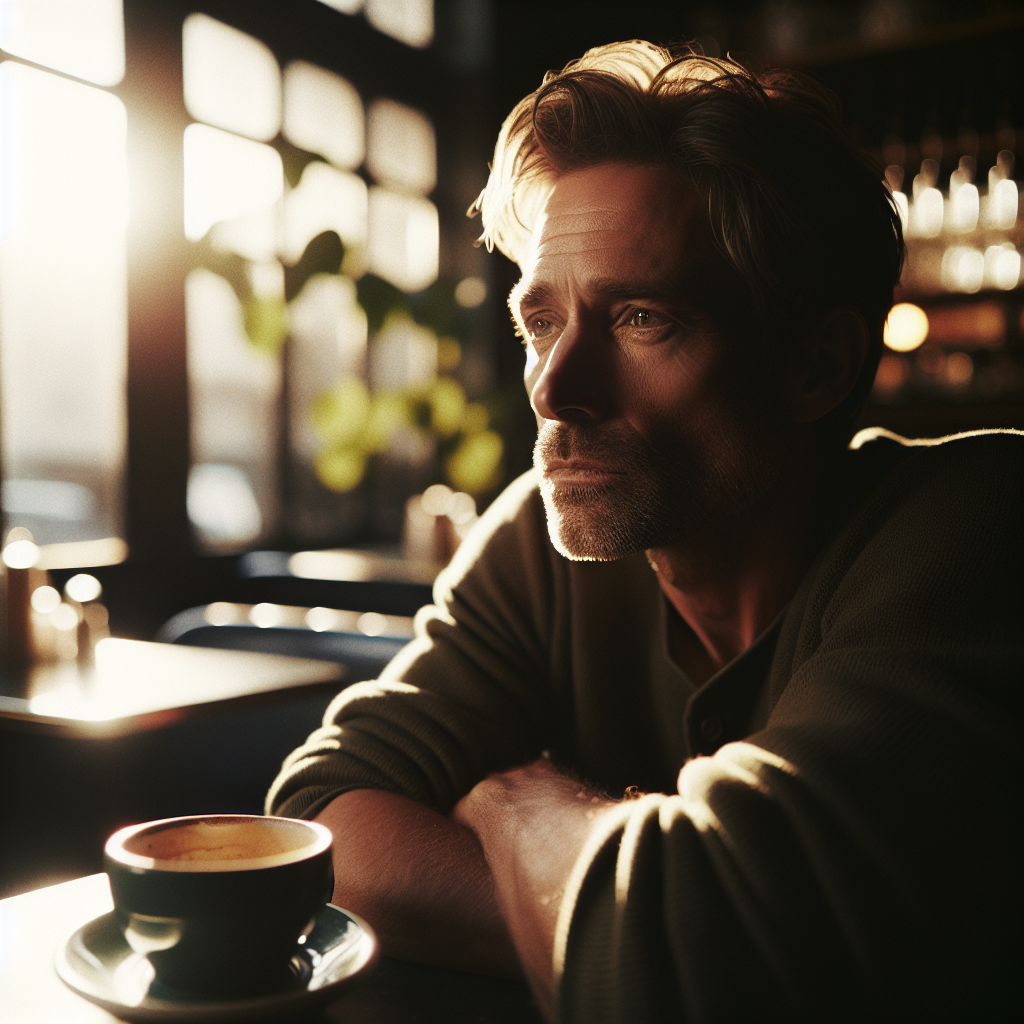
Side Glances: Framing Fleeting Moments into Small Narratives
 Maya Calder
·
Maya Calder
·
Why the side glance deserves your attention
There are moments that shout for attention and others that whisper. Side glances live in that whispering band — a quick look away, a half-smile at something off-frame, a hand mid-gesture. They’re small, easy to miss, and precisely why they make great photographs: they suggest a story without spelling it out. When you capture a glance in motion, you’re giving viewers the job of filling in the rest, which is more interesting than handing them every detail on a silver platter.
How to see them — training your photographer’s peripheral vision
Start by slowing down your scrolling and speeding up your noticing. Go places where people naturally move through small rituals: coffee shops, laundromats, bus stops, the kitchen in the late afternoon. Don’t wait for a grand gesture — watch for the small connective tissue between actions: a glance toward a window, an exchange of eyes across a table, someone checking their watch and catching another person’s reaction.
Practice with a neutral goal: notice five unintended glances in fifteen minutes. You don’t need to photograph them all; the act of looking changes how your camera moves when you do pick one to make.
Practical setup: gear and settings that help you catch the blink
You don’t need fancy kit. Compact cameras and phones are excellent for this work because they’re unobtrusive. If you have a mirrorless or DSLR, a small prime (35–50mm on full frame; 24–35mm on APS-C) is a good balance of reach and presence.
- Focus mode: Continuous AF (AF-C) or Eye AF if your camera supports it. The tracking helps when the glance is a fraction of a second.
- Shutter speed: 1/250s or faster for handheld street-style captures to freeze micro-expressions. If you want a hint of motion, drop to 1/125s and embrace gentle blur.
- Aperture: f/2.8–f/5.6. Wide enough to separate subject but not so wide you miss focus when people turn slightly.
- ISO: Let ISO rise before you slow the shutter. It’s better to keep motion frozen than to craft noiseless perfection.
Example:1/320s, f/2.8, ISO 800 — a good starting point in mixed indoor light.
Composition breakdown: turning a glance into a narrative
Think of the frame as a stage and the glance as a line of dialogue. You can emphasize it in several ways:
- Lead with negative space: A person looking off to the side creates curiosity. Leave room in the direction of the gaze; that empty area becomes the implied subject of the glance.
- Crop for intimacy: Tight crops on eyes and hands compress context and heighten emotional impact. Don’t be afraid to lose the top of a head or a shoulder — the feeling matters more than anatomical completeness.
- Use foreground elements: Shooting through a cup rim, a window, or strands of hair adds layers and the sense of a moment observed rather than staged.
- Sequence over perfection: A burst of frames often tells a better micro-story than a single, perfect frame. The shift of eyes, the breathing exhale, the raising of a hand — these tiny edits give rhythm.
Etiquette and ethics — photographing people closely
Side glances often happen in semi-private moments. Be mindful. If someone notices and seems uncomfortable, step back or show them the photo and ask permission before posting. A polite word — "that was a nice moment, may I share it?" — goes a long way. We want photographs that honor people, not exploit them.
A short assignment: 30 minutes of sideways attention
Take 30 minutes in a public place where people have small rituals. Your rules:
- Only shoot candid, unposed moments.
- Use a single focal length.
- Make a burst of 3–6 frames any time you see a glance worth keeping.
- After 30 minutes, pick three images and note what draws you to each. Is it the eye contact? The hand? The negative space? Write one sentence for each about the implied story.
This constraint forces you to notice pattern and intention rather than chasing novelty.
A tiny composition checklist to pocket
- Eyes: where are they going? Leave space there.
- Hands: they often finish the sentence the eyes begin.
- Foreground: add depth when you can.
- Background: remove distractions, or use them as context.
- Sequencing: shoot bursts to capture the arc of a micro-moment.
Parting note — a brief dispatch from a café
I was in a café last week, camera on the table, pretending to read while really practicing what I preach. A woman across the room glanced up, then sideways, then toward the window. I made a small series: a half-smile, a quick turn of the head, the ghost of a laugh. None were dramatic, but together they suggested a private joke shared with something beyond the frame — the sunlight on the street, a dog passing by, a remembered line from a book. I showed her one frame and she nodded as if I'd captured the thing she hadn't known she was carrying. That nod is the little reward of this work.
Photography is not always about the grand gesture. Sometimes it's about the quick, quiet look that says everything without saying anything at all.
Go out with a sideways glance. You’ll start noticing stories hiding in brief exchanges, and your camera will start to look less like an interrupting machine and more like a polite companion.